Introduction: The Current State of Social Media Management
In the ever-evolving landscape of digital communication, social media management and marketing have emerged as pivotal components for businesses of all sizes. Currently, these domains serve not just as channels for conversation but also as essential avenues for customer engagement, brand awareness, and sales growth. Companies leverage social media platforms to connect with target audiences, enabling a two-way interaction that fosters loyalty and brand advocacy.
Social media has revolutionized traditional marketing approaches, allowing businesses to engage with consumers on a personal level. Through carefully crafted ads, companies can share their messages with a global audience, tailoring content to meet specific demographics and interests. The metrics derived from social media campaigns provide valuable insights that inform business decisions, facilitating more effective strategies that align with customer preferences.
Moreover, the rise of artificial intelligence (AI) is poised to further transform social media marketing. AI tools can analyze vast amounts of user data to refine targeting, ensuring that marketing efforts reach the right audience at the right time. As algorithms become more sophisticated, businesses may leverage predictive analytics to anticipate trends and consumer behavior, enhancing their social media strategies. This shift suggests a future where social media management increasingly relies on intelligent systems to optimize engagement and maximize return on investment.
The current state of social media is characterized by a dynamic interplay between technology, user behavior, and marketing innovation. As we look toward 2026, understanding these foundational elements will be essential in evaluating how social media management and marketing will continue to evolve, potentially reshaping the digital marketing landscape as we know it today.
A Look Back: Social Media Trends Over the Past Decade
Over the last decade, the landscape of social media has seen significant transformations that have reshaped both its management and marketing functionalities. In the early 2010s, platforms like Facebook and Twitter dominated user engagement, serving as primary avenues for marketing activities. However, as consumer behavior evolved, so did the preferred platforms for interaction. The rise of visual-centric social media outlets, such as Instagram and TikTok, marked a shift toward content that emphasizes imagery and short video formats. This change has compelled brands to rethink their marketing strategies, pivoting towards visually engaging ads to capture audiences’ attention.
Moreover, throughout this period, the integration of artificial intelligence (AI) in social media management has grown exponentially. Tools utilizing AI have enabled marketers to analyze consumer behavior more accurately, offering insights into engagement metrics and content performance. This technological advancement has facilitated personalized marketing strategies, allowing brands to create tailored ads that resonate with specific audience segments. Automation technologies have also eased the management burdens on social media teams, enabling them to focus on crafting creative and innovative marketing campaigns.
Conversely, the past decade has also witnessed challenges for some social media platforms. Issues surrounding data privacy and ethical advertising practices have led to regulatory scrutiny and changing user perceptions. Consequently, platforms that failed to adapt to these changes experienced substantial drops in user engagement. Navigating this dynamic environment requires marketers to remain vigilant and responsive to emerging trends, ensuring that their strategies align with evolving consumer expectations and regulatory frameworks.
As we reflect on these trends, it becomes clear that social media is anything but stagnant. The shifts in user behavior, technological innovations, and the rise and fall of various platforms highlight the need for continued adaptation in social media marketing. This historical context sets the stage for understanding the future of social media management as we look ahead to 2026.
Artificial Intelligence (AI) has significantly transformed the landscape of social media management, marking a shift in how companies engage with their audiences. Today, numerous AI-powered tools are integral to optimizing marketing strategies across various social media platforms. These tools streamline processes such as scheduling, analytics, and content curation, allowing businesses to effectively enhance their online presence.
One of the primary applications of AI in social media management is in the realm of scheduling posts. Advanced algorithms analyze user behavior and engagement patterns, providing valuable insights on the optimal times to post content. This automation not only saves time for marketing professionals but also ensures that their ads reach the maximum number of users, thereby increasing engagement rates.
Moreover, AI plays a pivotal role in data-driven analytics. With an abundance of data generated by social media interactions, it is crucial for marketers to interpret this information accurately. AI-powered analytics tools dissect engagement metrics, demographic information, and audience preferences, allowing businesses to tailor their marketing campaigns effectively. By understanding these insights, marketers can make informed decisions about the type of content that resonates with their audience, leading to higher conversion rates.
Content curation is another area where AI demonstrates its value. Many tools now utilize machine learning to analyze trending topics and popular content within specific industries. This capability allows marketers to craft relevant and timely posts that align with current interests. Furthermore, AI can be employed to automate the content sharing process, identifying and distributing pertinent articles and posts to engage followers continuously.
As reliance on AI continues to grow, it becomes evident that these technologies are reshaping social media marketing strategies. By leveraging AI, businesses can optimize their engagement, refine their target audience, and ultimately enhance their overall marketing efforts in the competitive social media landscape.
Predictions for 2026: Will Social Media Management Be Dead?
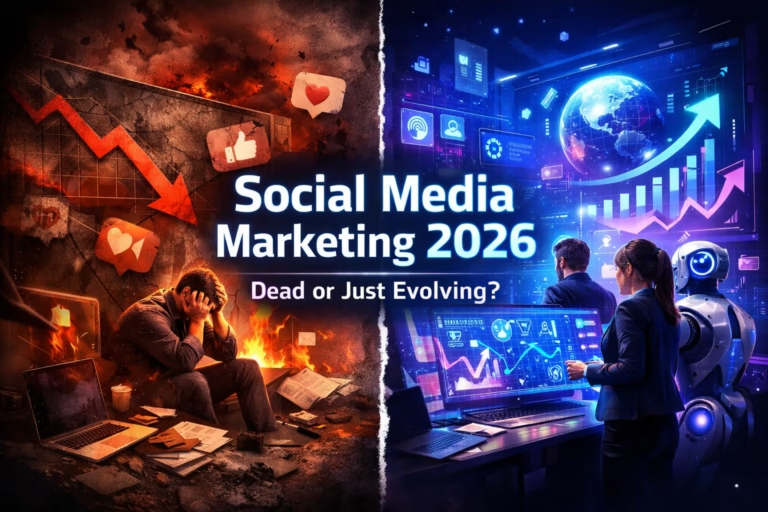
The evolution of social media management is poised to reshape the landscape of marketing by 2026. As technological advancements, particularly in artificial intelligence (AI), continue to transform the ways brands communicate with their audiences, the traditional practices of social media management may face significant changes. Instead of facing extinction, these practices are likely to adapt, leveraging new tools and insights to enhance marketing effectiveness.
Experts predict that AI-driven analytics will play a pivotal role in refining social media strategies. By 2026, marketers will increasingly rely on sophisticated algorithms to sift through vast amounts of user data, predicting trends and consumer behavior with unprecedented accuracy. This shift will enable companies to create hyper-targeted advertisements, significantly improving ROI and engagement rates. Consequently, relying solely on historical data may become a strategy of the past as real-time insights take precedence.
Additionally, as consumers become more discerning, the expectations on brands for authenticity and personalization are set to rise. Social media management will need to evolve to meet these demands. This might involve shifting away from generic campaigns to more nuanced, individualized approaches that resonate on a personal level with users. Therefore, marketers must be equipped to harness AI tools not just for analysis, but for crafting engaging content that speaks directly to their target audiences.
Furthermore, the proliferation of new platforms will challenge marketers to diversify their social media strategies. By 2026, emerging channels may emerge, requiring a more agile approach to social media management. Adapting to these changes will be crucial, but the fundamental need for strategic marketing will remain strong. In summary, rather than becoming obsolete, social media management is expected to evolve significantly, driven by technological innovation and changing consumer expectations.
AI Innovations on the Horizon: What Can We Expect?
As we look towards the next few years, the landscape of social media management and marketing is poised to be significantly transformed by advancements in artificial intelligence (AI). These innovations promise to redefine how businesses engage with their audiences, optimize their marketing strategies, and ultimately drive growth. One of the key areas of focus is the enhancement of chatbots. These AI-driven tools are becoming increasingly sophisticated, enabling brands to provide real-time customer service and engagement on social media platforms. In 2026, we can expect chatbots to utilize natural language processing (NLP) more effectively, allowing for more human-like interactions that can cater to specific customer needs.
Another anticipated innovation lies in predictive analytics. This technology will enable brands to analyze vast amounts of social media data to forecast trends, customer preferences, and future buying behaviors. By leveraging AI-driven analytics, marketers will be able to create tailored marketing ads that resonate more deeply with their target audience, leading to improved engagement and conversion rates. Predictive analytics will not only help in understanding current consumer behavior but will also assist in anticipating shifts in the market, allowing brands to stay one step ahead.
Personalized content generation is yet another area where AI is set to make a significant impact. With the ability to analyze user data, AI can assist marketers in creating highly personalized content that aligns with individual user preferences and behaviors. This level of customization will lead to more engaging social media interactions, enhancing the user experience and building stronger customer relationships. As audiences increasingly expect personalized experiences, the role of AI in content creation will be pivotal in driving effective marketing strategies.
In conclusion, the innovations in AI technology on the horizon are likely to reshape social media management and marketing, redefining engagement strategies and providing new avenues for brands to connect with their audiences.
Challenges Ahead: Privacy Concerns and Ethical Considerations
The realm of social media management and marketing is undergoing substantial transformation, primarily driven by advancements in technology and shifting consumer expectations. However, as marketers integrate artificial intelligence (AI) into their campaigns, significant challenges arise, particularly in the areas of data privacy and ethical considerations. These challenges not only affect how marketing strategies are formulated but also play a critical role in shaping consumer trust.
With the increasing reliance on social media for marketing purposes, the collection and utilization of consumer data have come under intense scrutiny. Users are more aware than ever of how their data is being used, leading to heightened concerns over privacy. Marketers must navigate this landscape carefully, balancing their need for insights through AI-driven analytics with the obligation to respect user privacy. This involves adhering to regulations such as the General Data Protection Regulation (GDPR) in Europe and similar laws across the globe, which enforce stringent guidelines on data usage.
Furthermore, ethical marketing practices are paramount in maintaining consumer trust. As social media platforms become saturated with various ads, marketers need to ensure that their strategies do not merely capitalize on consumer data but also prioritize transparency and honesty. Misleading advertisements or manipulative marketing tactics can lead to a backlash that damages not only a brand’s reputation but also the broader landscape of social media marketing. As AI plays a crucial role in automating and optimizing marketing campaigns, companies must implement safeguards that ensure ethical standards are upheld in their algorithms and data handling practices.
The challenge lies not in halting the use of AI for social media marketing but in evolving to create a framework that respects individual privacy and fosters trust. As the industry moves forward, striking a balance between strategic marketing goals and ethical considerations will be essential for establishing a sustainable future in social media management.
The Next Generation of Social Media Platforms
The landscape of social media is on the brink of transformation, driven by the emergence of newer platforms and evolving trends that are poised to reshape the way users interact and marketers connect with their audiences. As we look toward 2026, several key developments are becoming increasingly pertinent.
First, niche social media platforms are gaining traction. These platforms cater to specific interests or demographics—allowing for targeted engagement that is often lacking in larger networks. For marketers, advertising strategies may shift to focus on these communities, experimenting with tailored content that speaks directly to the preferences and needs of their members. Brands will thus need to refine their marketing approaches and develop customized ads that resonate with these smaller, more intimate audiences.
Another significant trend is the rise of decentralized social networks. With growing concerns over privacy and data ownership, more users are gravitating towards platforms that allow for greater control over their content and interactions. As these networks gain prominence, marketing strategies will need to adapt accordingly, emphasizing transparency and trustworthiness. AI technologies can play a crucial role here, enabling marketers to analyze user behavior within these decentralized spaces and create personalized content that fosters genuine engagement.
Generational shifts also influence platform preferences, with younger users often gravitating towards platforms that prioritize authenticity and creativity over traditional advertising. This demographic trends toward video-centric content and immersive experiences, which can change the marketing landscape considerably. Brands will need to innovate their engagement strategies, leveraging contemporary trends like short-form video ads, interactive content, and influencer partnerships to capture the attention of this audience.
In conclusion, the future of social media marketing is not about extinction but evolution. As new platforms emerge and user dynamics change, marketers will have the opportunity to explore innovative methods of engagement that align with the preferences of their target audiences.
Adapting Strategies: How Brands Can Thrive in 2026
As the social media landscape continues to evolve, brands must implement strategic adaptations to thrive in the competitive market of 2026. One of the foremost strategies involves embracing agility in marketing practices. This means being prepared to shift strategies quickly in response to changing consumer behaviors and emerging technologies. Brands that are agile can capitalize on trends and remain relevant, often outpacing more rigid competitors.
Another vital approach is fostering a culture of continuous learning. Marketing and social media professionals should prioritize staying informed about the latest developments in AI technologies and how they can be integrated into marketing efforts. For instance, utilizing AI-powered tools for data analysis can help brands understand audience preferences in real-time and tailor their content accordingly. This can significantly enhance the effectiveness of social media ads and marketing campaigns, making efforts more targeted and efficient.
Furthermore, brands should prioritize leveraging new technologies that can enhance user engagement. Innovations such as augmented reality (AR) and virtual reality (VR) offer unique and interactive ways for brands to connect with their audiences on social media platforms. By adopting these cutting-edge technologies, companies can create memorable experiences that resonate with consumers, thereby fostering deeper loyalty.
Moreover, maintaining a consistent presence across various social media platforms is crucial. Brands should not only focus on one or two channels but instead diversify their efforts to reach wider audiences effectively. Consistent engagement across diverse social media platforms ensures that brands stay top-of-mind and can intercept potential consumers at various touchpoints.
In conclusion, adaptability, continuous education, and the integration of innovative technologies are paramount for brands aspiring to succeed in the dynamic environment of social media marketing in 2026. By remaining flexible and forward-thinking, companies can turn challenges into opportunities, thereby ensuring sustained growth and relevance.
Conclusion: Embracing Change in Social Media Management
As we look towards 2026, it becomes increasingly evident that social media management and marketing are in a state of evolution rather than decline. The advent of artificial intelligence (AI) has begun to transform how brands interact with their audiences, creating a landscape where traditional methodologies are supplemented or replaced by advanced technologies. In this environment, marketers need to adapt their strategies to leverage these innovations effectively.
The integration of AI-driven tools is reshaping how social media ads are created, targeted, and optimized. With algorithms capable of analyzing vast amounts of data in real time, brands can tailor their marketing efforts more precisely, ensuring that content reaches the right audience at the right moment. This shift is not merely a trend; it represents an essential evolution in the way social media platforms operate. Understanding these systems will be crucial for organizations aiming to maintain a competitive edge.
Furthermore, as user preferences evolve, brands must be agile and responsive to shifts within social media platforms and consumer behavior. This necessitates a fundamental change in perspective for marketers, prioritizing adaptability and continuous learning over rigid adherence to legacy strategies. Staying informed about emerging platforms and changes in algorithms will empower businesses to capitalize on new opportunities for engagement and growth.
In conclusion, the future of social media management and marketing is not so much about the death of traditional tools but rather about reimagining them. By embracing change and adopting innovative approaches fueled by AI, businesses can thrive in the dynamic landscape of social media marketing in 2026 and beyond. Those who remain steadfast in their commitment to evolution will be best positioned to harness the potential of these powerful digital channels.